
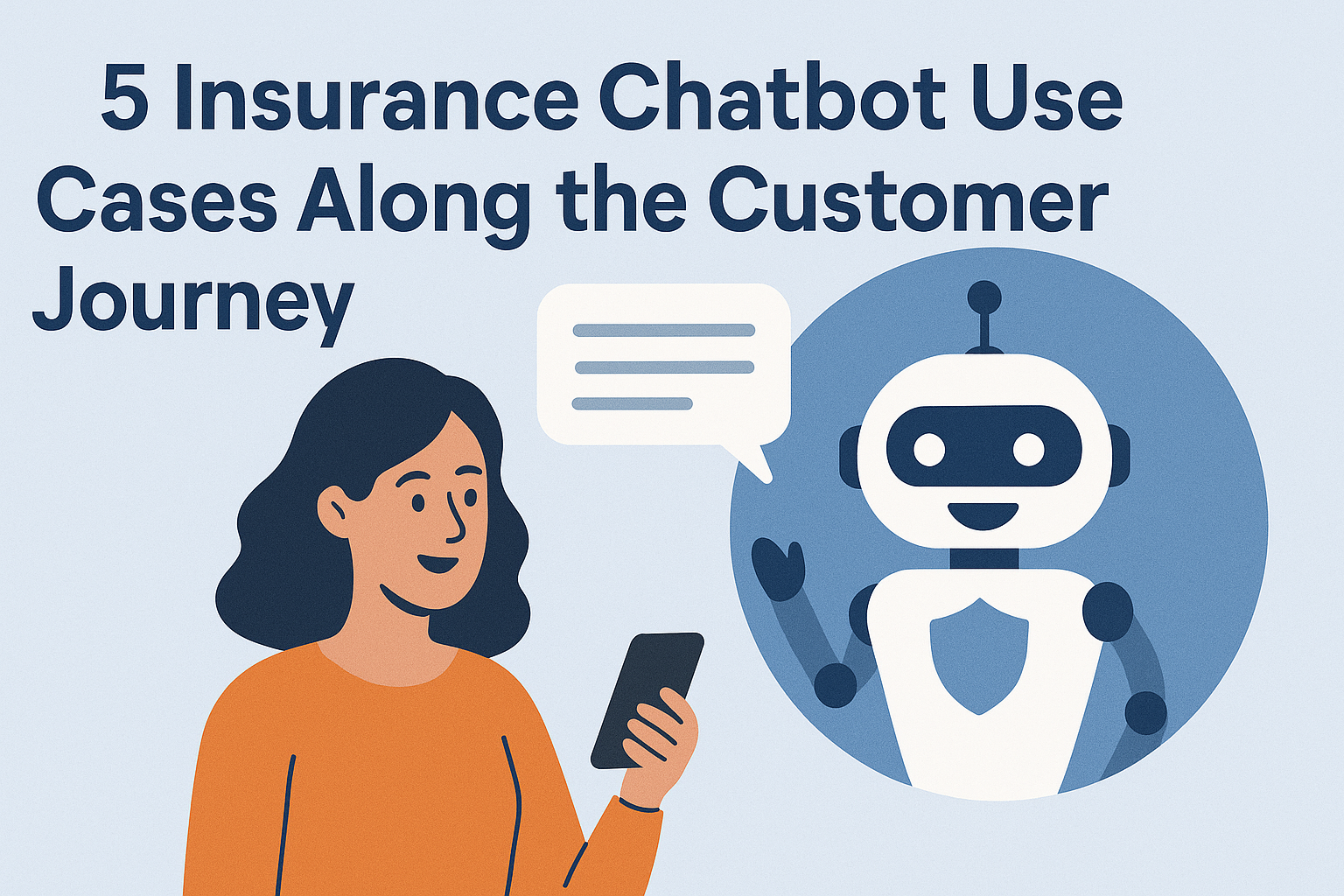
5 Insurance Chatbot Use Cases Along the Customer Journey: Strategy, Metrics & Best Practices
Insurance companies face an increasingly competitive market where quick responses, transparency, and personalized service are critical to winning and keeping customers. Yet, many still struggle with lead drop-offs, slow quote processes, and fragmented support. Technology can transform these pain points. 5 Insurance Chatbot Use Cases Along the Customer Journey offer actionable strategies to address conversion gaps, automate repetitive tasks, and integrate digital experiences that drive real business results.
In this comprehensive guide, we’ll clarify the role of chatbots across every phase of the customer journey, from awareness to post-sales retention. You’ll learn why mapping chatbot use cases to your marketing and service funnels matters, common mistakes to avoid, and which metrics truly indicate success. Our approach is grounded in measurable impact—helping your team make confident, data-backed decisions. As you explore, remember that the right tech solution must fit your specific business goals. If your company is looking for practical ways to improve ROI, the experts at Boxmark Digital can help you map out an end-to-end strategy that combines chatbot integration with conversion-focused web design, analytics, and data-driven campaigns.
Strategic Context: Why Chatbots Matter in the Insurance Customer Journey
Why This Topic Matters for Your Business
The insurance industry is built on trust, fast response, and clear guidance. Today’s consumers expect seamless digital experiences, instant answers, and convenient self-service options. Integrating chatbots at strategic points in your customer journey can:
- Reduce lead and policyholder drop-off rates
- Automate routine queries, freeing up agents for higher-value tasks
- Drive conversions with real-time quotes and onboarding
- Provide 24/7 claims support to boost customer satisfaction
- Enable data collection for better segmentation and remarketing
Typical Problems Insurance Chatbots Solve
- Slow response times that cause prospects to abandon quote requests
- High support volume leading to long wait times in customer service centers
- Manual, error-prone data entry affecting policy applications and claims
- Fragmented onboarding with low policyholder engagement
- Lack of personalized recommendations and upsell/cross-sell opportunities
For further insights on how digital tools can connect marketing to business outcomes, explore how marketing connects businesses to customers.
Key Concepts: Understanding Insurance Chatbots in the Digital Ecosystem
Basic Definitions
- Insurance Chatbot: Automated conversational software that interacts with prospects, policyholders, or agents to answer questions, gather info, and support processes.
- Customer Journey: The complete set of experiences a customer has with your brand, from initial interest through long-term relationship and renewal.
- Use Case: A specific, situational application of chatbot technology that addresses a pain point or opportunity in your business process.
Differences vs. Other Approaches and Digital Channels
- Traditional insurance websites capture leads but often fail to convert due to slow forms or unclear next steps.
- Email and call centers require manual intervention and are prone to delays.
- Chatbots provide instant, interactive, and context-aware support—bridging lead gen, onboarding, service, and claims seamlessly.
Comparison Table: Chatbots vs. Traditional Channels in Insurance
| Channel | Speed | Personalization | Availability | Data Collection |
|---|---|---|---|---|
| Chatbot | Instant | High | 24/7 | Automated, structured |
| Website form | Delayed (agent review) | Low | 24/7 (delayed reply) | Siloed/manual |
| Phone | Fast (if answered) | Medium | Business hours | Manual entry |
| Slow | Medium | 24/7 (delayed reply) | Manual |
To understand how analytics can support your digital strategy, visit our guide to using analytics for better marketing.
Common Mistakes and Bad Practices in Insurance Chatbot Deployment
Mistake 1: Over-Automation Without Human Handoff
Fully automating sensitive or complex conversations can frustrate customers and damage trust. Always provide easy escalation to human agents—especially for claims or complaints.
Mistake 2: Ignoring Data Privacy, Security, and Compliance
Failing to follow best practices in data handling or regulatory standards (like HIPAA for health insurance) exposes your business to significant risks. Partner with experts to ensure chatbot compliance from the start.
Mistake 3: Deploying Generic Chatbots Without Custom Insurance Flows
Templated chatbots that aren’t tailored to insurance processes result in missed opportunities. For example, an off-the-shelf chatbot may not understand complex quote requirements or claims validation, limiting its ROI.
- Not integrating chatbots with CRM and policy systems
- Neglecting to update scripts, FAQs, or escalation protocols
- Poor user experience or unclear CTAs within the bot
Read about the common mistakes businesses make in digital strategy to avoid pitfalls in your own implementation.
Best Practices and Recommended Framework for Insurance Chatbot Success
Step 1: Map Chatbot Use Cases to Each Stage of the Customer Journey
Identify friction points in your funnels, such as slow response at lead generation or confusing onboarding steps. Choose chatbot use cases that alleviate these issues. For insurance companies, the five most impactful use cases are:
- Lead qualification and instant quoting
- Automated policy onboarding
- Bespoke customer support (FAQs, policy docs, payment reminders)
- Claims intake and status tracking
- Retention and upsell messaging at renewal time
Step 2: Personalize and Integrate for Each Use Case
- Sync chatbot workflows with your CRM/policy management systems
- Tailor scripts and language to insurance products and the customer’s stage
- Include dynamic content (e.g., document uploads, renewal reminders, next-step CTAs)
- Test regularly and update based on analytics and customer feedback
Step 3: Focus on User Experience, Compliance, and Measurement
- Ensure a seamless handoff to human agents where needed
- Follow accessibility best practices for digital tools (see this in-depth mobile app design guide by Smashing Magazine)
- Clearly communicate data usage and privacy policies
- Set up analytics dashboards to track conversions, NPS, and resolution times
For examples of how digital tools can unlock business potential, see our AI strategy guide.
Metrics and Measurement: Proving Chatbot ROI Across the Insurance Journey
Key KPIs for Insurance Chatbot Success
- Lead conversion rate: Percentage of chatbot conversations that generate a quote request or warm lead
- Policyholder onboarding completion: How many sign-ups finish onboarding via chatbot
- Claim submission and resolution speed: Time from claim start to finish
- User satisfaction: Measured by NPS or post-chat ratings
- Reduction in agent workload: % of repetitive queries handled automatically
- Engagement at renewal/reminder stages: Increased retention or cross-sell rates
How to Interpret Results
- Look beyond just open or interaction rates—identify which steps in the journey improve or lag
- If conversion jumps after introducing a quote chatbot but policy completions remain flat, investigate friction or confusion post-quote
- Review chatbot logs for abandonment points or misunderstood user intents
Data-Driven Decisions for Continuous Optimization
Success with insurance chatbots is built on iteration. Measure, but also test new approaches—such as clarifying eligibility, adding document upload, or refining post-claim follow-up flows. Benchmark each update with clear KPIs.
Deepen your understanding of data-driven marketing at our analytics hub and see how performance insights can optimize every touchpoint.
Performance optimization is critical for seamless customer experiences. For deeper technical insight, consult Google’s official web performance fundamentals.
Frequently Asked Questions (FAQ) About Insurance Chatbots
What are the top 5 insurance chatbot use cases along the customer journey?
They are: lead qualification/quoting, onboarding automation, support/FAQ handling, claims intake/tracking, and retention/upsell at renewal.
How does a chatbot improve insurance lead generation?
It instantly captures and qualifies leads, provides quotes 24/7, and routes high-potential prospects to human agents, reducing drop-offs and boosting conversion.
Can chatbots handle complex insurance claims?
With proper design, a chatbot can collect claim information, guide users through documentation, and provide real-time status updates. For complex cases, escalation to a human is essential.
How should insurance companies measure chatbot ROI?
Track changes in lead conversion rates, onboarding completion, average claim resolution time, and reduction in manual agent load. User satisfaction (NPS) is also key.
What compliance risks do insurance chatbots face?
Risks include data privacy breaches, unauthorized access, and not meeting regulatory standards (state or federal). Always consult legal and IT security teams to ensure compliance.
Is mobile chatbot integration important for insurance?
Yes—mobile-first design ensures policyholders can interact via their preferred channels, increasing engagement and service efficiency. For more on mobile app UX, see the comprehensive guide on mobile app design.
How do chatbots impact digital marketing funnels for insurance?
Chatbots nurture leads through the funnel, personalize follow-ups, and provide real-time support—closing gaps where traditional channels fail to convert visitors into clients.
Can chatbots be used for upsell and cross-sell in insurance?
Absolutely. Chatbots can recommend additional policies based on user data and behavior, increasing lifetime value and customer satisfaction when done transparently.
What mistakes should insurance companies avoid with chatbots?
Major mistakes include poor integration, neglecting the human handoff, generic scripts, lack of personalization, and failing to measure impact. Design with customer intent and metrics in mind.
Do all insurance companies need custom chatbot development?
Not always. Smaller firms can start with modular, pre-built solutions but must customize scripts and flows for their products, regulations, and customer needs. For advanced needs, consider expert development.
Wrap-Up and Next Steps: Implementing Insurance Chatbots for Real Results
Insurance chatbots, when mapped carefully to the customer journey, can dramatically improve conversion, onboarding, claims service, and retention. To maximize ROI, align chatbot use cases with business objectives, measure relevant KPIs, and prioritize continuous optimization with analytics feedback. Remember: the goal isn’t just automation, but strengthening relationships and driving measurable growth.
Ready to identify gaps or want to optimize your digital strategy? Request a digital strategy audit from our team, or improve your website’s ROI-focused design with proven expertise from Boxmark Digital.
About Boxmark Digital
Boxmark Digital is a digital marketing and technology agency based in the United States, specializing in SEO, conversion-focused web design, mobile app development, and data-driven digital campaigns. With years of experience helping local businesses and SMBs grow sustainably, Boxmark Digital focuses on measurable results, personalized strategy, transparent reporting, and continuous optimization. Boxmark Digital supports businesses in the United States and beyond looking to leverage technology for smart, sustainable growth.

ai customer service, Latest technology news, chicago digital marketing company, professional web design, seo services chicago il, affordable digital marketing services San Antonio, professional digital marketing services New York, Aurora digital marketing company, digital marketing companies close to Las Vegas, digital marketing agency in Indianapolis