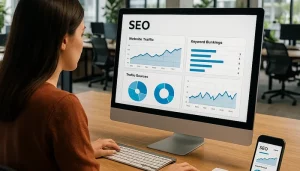

Why SEO Is So Important in a Big City Like Chicago: Strategy, Metrics, and ROI
In the vast, fast-paced markets of cities like Chicago, local businesses often struggle to attract the right clients, convert web visitors, and truly measure their marketing investment. With countless competitors vying for the same audience, simply launching a website or running generic ads is not enough. This is why SEO is so important in a big city like Chicago—helping your business stand out, reach customers when it matters most, and drive measurable results.
In this guide, we’ll break down the strategy behind effective SEO in metropolitan landscapes, clarify key metrics and best practices, highlight pitfalls to avoid, and answer the pressing questions business owners face. Whether you’re refining your local SEO, investing in conversion-focused web design, or evaluating how mobile apps and marketing funnels can drive ROI, you’ll find clarity here. Boxmark Digital is committed to helping local companies in the United States unlock digital growth the right way.
Strategic Context: SEO’s Critical Role in Major Cities
Why This Topic Matters for Business
In major cities, visibility is more valuable—and more difficult to achieve—than ever before. A business that is not easily found in local searches often loses ground to competitors who dominate search results. For example, a restaurant, law firm, or retail shop buried on page two or three of Google will struggle to attract new clients, no matter how great their offering is.
- Local SEO can drive customers at moments of intent, increasing walk-ins and calls.
- Conversion-focused web design ensures visitors become leads or customers, not just traffic.
- Analytics and marketing funnels help you understand and refine where and why prospects drop off.
- In an environment with high paid advertising costs, organic SEO can be a sustainable engine for growth.
Typical Problems This Solves
Focusing on SEO and connected disciplines in a big city can help solve:
- Low website traffic from search engines
- High bounce rates and poor conversion due to ineffective web design
- Lack of actionable data from campaigns
- Dependence on word-of-mouth alone
- Over-reliance on high-cost paid campaigns
Read more about using SEO to find your business niche for long-term growth.
Key Concepts You Must Understand
Basic Definitions
- SEO (Search Engine Optimization): Increasing your website’s visibility in search results—especially for relevant, high-intent keywords.
- Local SEO: Targeting customers in a specific geographic area by optimizing your presence in local search results and directories.
- Conversion-Focused Web Design: Structuring and designing your website to turn visitors into leads or customers, not just attracting traffic.
- Mobile App Development: Creating applications that offer utility, loyalty, or commerce directly on your customers’ phones—a critical complement to your web presence.
- Marketing Funnels & Analytics: Mapping the path from stranger to customer, measuring each step, and optimizing for greatest return.
- Paid Campaigns: Using paid ads (search, display, social) to supplement organic reach, always working in tandem with SEO for maximum impact.
Differences vs Other Approaches/Channels
- Organic Search (SEO): Long-term, cost-effective strategy for sustainable traffic.
- Paid Ads: Immediate but often expensive; traffic stops when budget runs out.
- Social Media: Enhances brand, but usually less intent-driven than search.
- Referrals/Word of Mouth: Valuable, but hard to scale and unpredictable.
Comparing Marketing Strategies in Big Cities
| Channel | Time to Results | Sustainability | Cost | Scalability |
|---|---|---|---|---|
| SEO | Medium-Long (3-6+ months) | High | Moderate | High |
| Paid Campaigns | Immediate | Low (budget-dependent) | High | Moderate |
| Social Media | Varies | Medium | Variable | Medium |
| Word of Mouth | Slow | Medium | Low | Low |
According to experts at Ahrefs, high-performing SEO is built on strategy, technical excellence, and continuous tracking—not just keywords or content volume.
Common Mistakes and Bad Practices
Relying Solely on Paid Campaigns
While paid search provides immediate traffic, it can quickly drain budgets—especially in competitive cities. Many businesses overspend on Paid Campaigns without developing a sustainable SEO foundation. Effective digital marketing requires a balance that fosters long-term lead generation.
Ignoring Local SEO Fundamentals
Ignoring essential elements such as Google Business Profile listings, location optimization, and locally relevant content limits your reach. A robust local SEO strategy is vital for brick-and-mortar success in larger markets. See more proven local SEO optimization practices.
Underestimating Conversion-Focused Web Design
Bringing traffic to your website is only the first step. Sites that load slowly, lack clear calls-to-action, or confuse users will not deliver results. Conversion-focused web design improves your return at every visitor interaction stage.
Best Practices and a Recommended Framework
Step 1: Audit and Benchmark Your Current Status
- Conduct a full site and SEO audit to baseline current visibility, technical health, and conversion obstacles.
- Map out local and city-wide competitors, analyzing content, backlinks, and keyword focus.
- Set realistic short and long-term goals based on benchmark data.
For a technical checklist, explore our guide to SEO audits.
Step 2: Prioritize Local SEO and Conversion-Focused Web Design
- Claim and optimize your Google Business Profile and key directories.
- Create location-specific content and landing pages tailored for Chicago and surrounding areas.
- Ensure your website is fast, mobile-friendly, and designed to move visitors toward inquiry, booking, or sale.
Consider working with a partner experienced in conversion-focused web design that supports both SEO rankings and lead generation.
Step 3: Integrate Data Analytics and Iterative Testing
- Set up goal tracking with analytics dashboards (Google Analytics, Search Console, etc.).
- Regularly review metrics and user flow to spot friction points or opportunities.
- Iterate landing pages, campaigns, and funnels based on real data—not assumptions.
Building a robust marketing funnel can transform your approach—learn advanced funnel design techniques.
Metrics and Measurement: How to Track Success
Key KPIs
- Search Engine Rankings: Track for core local and service keywords.
- Organic Traffic: Growth trends and traffic quality over time.
- Conversion Rate: Percentage of visitors taking key actions (inquiries, bookings, purchases).
- Leads/Revenue Generated: Direct impact of SEO and digital efforts on sales.
- Cost per Acquisition (CPA): Total spent per new client or sale acquired through digital channels.
How to Interpret Results
- Improvements in rankings and organic traffic often show in 3–6 months; keep expectations realistic.
- Long-term growth depends on iterative actions, not one-time fixes.
- Sudden changes (traffic drops or spikes) must be analyzed for technical issues or Google updates.
Data-Driven Decisions
- Use analytics to compare channel performance—see which sources bring the highest quality leads.
- Test variations in landing pages and CTAs to increase conversion rates by 10–50% or more.
- Employ A/B testing for paid campaigns, landing pages, and even mobile app features where possible.
According to best practices from Disruptive Advertising, ongoing measurement paired with quick iteration yields the best results from digital marketing in highly competitive markets.
Frequently Asked Questions (FAQ)
What is the difference between SEO and local SEO?
SEO targets maximizing overall online visibility, while local SEO focuses specifically on attracting searchers in a targeted geographic area, such as Chicago. Local SEO includes map listings, location pages, and city-specific keywords.
How long does it take to see SEO results in a big city?
Businesses often start seeing noticeable improvements in 3–6 months, depending on competition, website history, and the intensity of the SEO effort. Results grow with consistent optimization and measurement.
Do I need conversion-focused web design if I already have traffic?
Yes—high traffic is only valuable if your site guides users toward becoming leads or customers. Conversion-focused web design increases your return by eliminating friction and boosting engagement.
Are paid campaigns a substitute for SEO?
No—paid campaigns are a useful addition but cost rises quickly, and results are short-term. Effective SEO builds lasting value, attracts organic leads, and lowers long-term acquisition costs.
How does analytics impact digital marketing success?
Analytics allow you to measure what matters, optimize based on real behavior, and allocate budget to the best channels. This is crucial for maximizing ROI, especially in complex city markets.
What should I do if my rankings suddenly drop?
Investigate for technical SEO issues, Google algorithm changes, lost links or content errors. Regular audits help prevent severe drops. For more, read about correcting SEO disasters.
Can mobile app development support my digital growth?
Yes, especially for brands offering on-the-go services, commerce, or loyalty features. Mobile apps boost accessibility and engagement—complementing your web presence. Explore expert mobile app development options aligned to local business goals.
How do I build a seamless marketing funnel?
Map each stage your customer takes, create targeted content and CTAs, and use analytics to optimize. A marketing funnel clarifies each step to conversion—read about funnel structure strategies.
Why are some businesses unable to grow through digital channels?
Common causes are lack of differentiation, ignoring local SEO, poor web design, or failing to analyze data. Sustainable growth demands a holistic, strategy-driven approach.
Should I hire an agency or manage SEO in-house?
In-house works for some, but expert agencies offer advanced tools, skills, and faster results. Agencies like Boxmark Digital bring proven expertise in large, competitive markets and can drive targeted ROI.
Wrap-Up and Next Steps
In cities like Chicago, digital competition is fierce, but so is the opportunity. Investing in a comprehensive strategy that combines SEO, conversion-focused web design, data-driven marketing funnels and analytics, and smartly integrated paid campaigns is the best path to sustainable growth.
Ready to take your business to the next level? Improve your SEO strategy or talk to the team at Boxmark Digital—we’ll help you measure what matters, avoid costly mistakes, and build a presence that converts.
About Boxmark Digital
Boxmark Digital is a digital marketing agency supporting businesses across the United States and beyond. With deep expertise in SEO, web design, mobile app development, and data-driven campaigns, Boxmark Digital empowers local business owners and teams to achieve measurable, sustainable digital growth through proven strategies and transparent reporting.


Chicago, chicago digital content marketing strategy, local seo services for chicago, monthly seo Services chicago, Los Angeles local seo services, professional seo services New York, local seo services Miami, monthly seo Services Indianapolis, local seo services for Houston, affordable seo services Austin