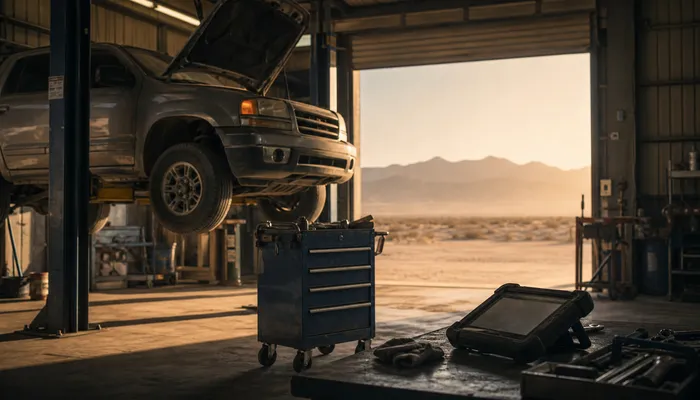
A driver pulls into a lot off Camelback Road on a July afternoon, the AC pushing warm air, and reaches for a phone before the engine has cooled. That single moment, heat plus discomfort plus an immediate problem, is where a large share of local repair demand begins. It also explains why seasonal car repair search demand in Phoenix does not move the way it does in a market with four mild seasons. The Valley compresses certain kinds of work into narrow, intense windows, and driver behavior follows the weather almost step for step.
That rhythm is useful for any independent shop, service manager, or mobile mechanic trying to keep bays busy all year. It is not about chasing storms. It is about knowing which months bring urgent work, which bring planned maintenance, and how those two produce very different kinds of search traffic.
Phoenix Weather Sets the Rhythm of Repair Demand
Phoenix sits in the Salt River Valley, and the local climate is not background detail for a shop. It is the calendar. Summer heat arrives early and lingers, the monsoon window brings short and violent storms, and the shoulder months carry wind-blown dust and long highway drives. Each condition stresses a different part of a vehicle, and each produces a different kind of customer question.
The pattern repeats in a recognizable shape. Heat-related failures are urgent and often same-day. Monsoon damage is sudden, erratic, and clustered into a few weeks. Dust and trip preparation are slower, planned well in advance. A driver searches in each situation with a completely different mindset, and that difference matters more than any single keyword a shop might target.
City-level reference data, including the Census Bureau’s public profile for the city, is available if you want to ground your own planning in official sources rather than assumptions.
What Drivers Look For When the Heat Peaks
From late spring through early fall, air conditioning and cooling system complaints dominate the front counter. A driver who felt comfortable all winter often does not notice a slow refrigerant leak until the first stretch of triple-digit days, which is why the same repair shows up on so many invoices within a two-week window. The failure is not new. The heat simply makes it impossible to ignore.
Cooling, AC, and Battery Work Comes First
When a component fails in extreme heat, the driver is usually searching from a parking lot rather than a desk. That produces short, urgent, locally focused queries, decided within minutes and heavily shaped by map results, star ratings, and whether a shop’s phone number is easy to tap. Batteries, belts, hoses, radiators, water pumps, and compressors all fall into that same urgent category, because the vehicle stops being usable right away.
Urgent Repairs and Planned Maintenance Search Differently
- Urgent work: same-day intent, phone-first behavior, strong dependence on map visibility and recent reviews.
- Planned work: researched across several days, with comparisons between shops, service descriptions, and scheduling options.
- Seasonal preparation: searched before the heat or the storms arrive, usually weeks ahead of the appointment itself.
A shop that only shows up well for the first category will always feel like it is reacting. The second and third categories are where a service mix can be shaped instead of simply absorbed.
Monsoon Season and Storm-Related Damage
The monsoon window changes the type of work entirely. Dust storms, sudden heavy rain, and standing water on roads produce glass damage, exterior damage, and collision work inside a compressed period. Because these events are localized and unpredictable, demand can shift from one side of the metro to another within days, and a shop can be flooded with calls one week and quiet the next.
Storm-related searches tend to spike and fade quickly. A driver dealing with a cracked windshield or a dented panel often searches while the event is still in the news cycle, then moves on to the next errand. That short window rewards shops whose local visibility was already established before the season started, not shops trying to build it during the rush.
Seasonal demand is not something a shop can create. It is something a shop can be ready for, or miss entirely.
Dust, Road Trips, and the Shoulder Months
The months between the extremes are quieter but not empty. Fine desert dust works its way into air filters, cabin filters, and intake systems, and it usually shows up as a gradual performance complaint rather than a breakdown. Drivers plan that kind of work around convenience, which means they compare options and read more before they book anything.
Trip Preparation and Returning Seasonal Residents
Long drives also shape demand. Trips toward Flagstaff, Sedona, Tucson, or San Diego prompt pre-trip inspections, fluid checks, tire work, and brake service, all planned maintenance with a deadline attached. Snowbird season adds another layer, as seasonal residents return to the Valley and many of them bring vehicles that sat for months and need attention before regular use resumes.
| Season | Typical driver concern | Search mindset |
|---|---|---|
| Hot months | AC, cooling system, batteries, tires | Same-day, phone-first |
| Monsoon window | Glass, exterior, collision damage | Sudden spike, short window |
| Shoulder months | Dust-related maintenance, filters, fluids | Planned, comparison-driven |
| Travel and snowbird season | Inspections, brakes, tires, sitting-vehicle service | Scheduled ahead with a deadline |
None of this requires inventing a new service line. It requires knowing which month a shop’s existing services are most likely to be searched, and making sure the website and local listings reflect that reality before the phone starts ringing.
Why This Pattern Matters for Local Visibility
Search visibility is not a single switch. A shop’s ability to appear for urgent heat-related work in July is built from signals that were already in place in March: consistent business information across listings, pages that describe the actual work performed, reviews that mention real repairs, and a site that loads fast on a phone held in a parking lot.
That is the practical side of how BoxMark Digital plans seasonal search visibility for Phoenix repair shops. The work is organized around the local demand cycle instead of being published in one burst and left alone. Reading search data through the same lens helps too. Tools that track search movement can show a cooling-system spike in June and a glass spike in August, and those patterns tell a shop more than a single monthly ranking report ever will. Owners who want to build the underlying foundation can start with improving search engine rankings, then layer in keyword research fundamentals so the seasonal patterns are matched to real service descriptions.
One thing worth stating plainly: BoxMark Digital serves the Phoenix metro as a remote market area. There is no physical office in the Valley and we do not imply one. Strategy, implementation, and reporting are delivered remotely, which is standard for search work and does not require being in the same city as the shop.
Plan Your Season Before It Starts
The most useful time to think about July is March. A short review of last year’s busiest weeks, the services that filled them, and the pages that did or did not get found is usually enough to reveal where the gaps are. If a second set of eyes would help, we offer a free consultation to walk through how your services line up with seasonal demand across the metro.
Call 1-888-315-2721 during business hours, or send a note through the contact page at https://boxmarkdigital.com/contact/. No pressure and no script, just a look at which months your shop is easiest to find and which ones it is not.